For US‑based students in 2026, the ideal Gimkit flashcards alternative should be fast, engaging, and built for long‑term memory—not just for one‑time quizzes.Many US students still use Gimkit for live classroom games, but they often need a dedicated flashcard tool that supports self‑study, repetition, and mobile access outside class.
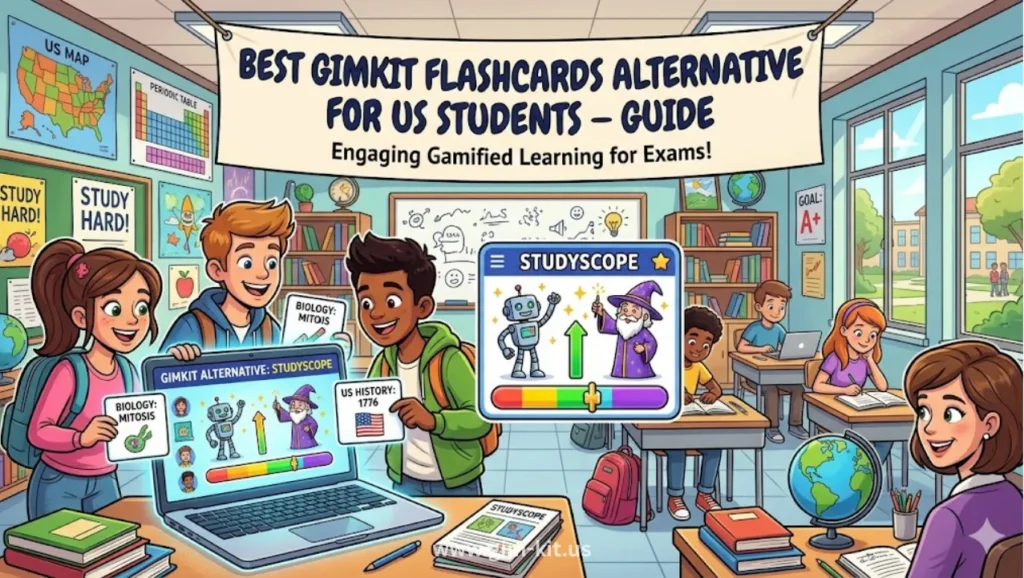
In this guide, we break down why Gimkit falls short as a flashcard solution, what US learners actually need, and how a smarter, AI‑driven flashcard platform solves those problems better.
Why Students Use Gimkit Flashcards
Gimkit is popular in US classrooms because it turns quizzes into live, strategy‑based games where students earn virtual cash and power‑ups.
Teachers use it to spice up review sessions, warm‑ups, and exit tickets, especially in middle school, high school, and some college prep courses.
Key benefits US students and teachers notice:
- High engagement: Students stay focused because of the game‑like economy and competition.
- Real‑time feedback: Instant grading helps learners see which concepts they know or miss.
- Flexible use: Teachers can use Gimkit for live play, homework, and review modes in a LMS like Google Classroom.
Common Problems with Gimkit Flashcards
While Gimkit is fun, US students often hit several pain points when trying to use it as a flashcard system:
Gets boring over time
The same game formats and power‑ups get repetitive, so students lose motivation after a few weeks.
In many schools, students say they prefer variety in study modes (cards, quizzes, audio, games) instead of just one quiz style.
Doesn’t help long‑term memory
Gimkit is designed for single‑session or near‑term quizzes, not spaced repetition over days and weeks.
Without a system that schedules reviews, students may feel like they “know it now” but still forget by test time.
Takes too long to create sets
Teachers and students in the US often complain about manual question entry, limited editing, and kit limits on the free plan.
Some teachers must re‑create or delete kits frequently, which wastes time instead of letting them focus on teaching.
What Students Actually Need
For US high school and college students, effective flashcard study must match how they actually learn and how they use devices in 2026.
Fast creation
Students in the US today want tools that can turn PDFs, slides, notes, or even YouTube videos into flashcards in seconds, not manual typing.
AI‑assisted import from text, images, or audio saves time and reduces friction for busy students.
Engaging experience
A good alternative should mix gamification, quick quizzes, and progress‑tracking so studying feels less like a chore.
Leaderboards, streaks, badges, and instant feedback keep motivation high, especially for teens who grew up with apps and games.
Better retention
US researchers and educators consistently show that spaced repetition systems (SRS) improve long‑term recall for exams.
A strong flashcard tool should automatically schedule reviews based on how well the student remembers each card.
A Smarter Way to Study Flashcards
This is where your tool becomes the ideal Gimkit alternative for US students: a dedicated flashcard platform that combines AI, spaced repetition, and gamification in one place.
Instead of forcing students to jump between Gimkit for games and another app for flashcards, your platform lets them:
- Generate flashcards from notes, PDFs, slides, or prompts in seconds using AI.
- Use spaced‑repetition scheduling so they review the right cards at the right time.
- Play mini‑games and quizzes directly inside the flashcard app, making review active and fun.
Because your tool is built for self‑study and retention, US students can use it alone at home, in libraries, or on the bus—not just when the teacher launches a Gimkit game in class.
Features That Make It Better Than Gimkit
Here are the key features that position your solution as a better flashcard choice for US students than Gimkit:
AI flashcard generator
- Students can paste notes, upload a PDF, or connect a slide deck, and the AI creates clean, accurate flashcards automatically.
- This cuts creation time from hours to minutes, which is especially valuable for AP courses, college‑level classes, and cram‑heavy exam weeks.
Spaced repetition
- The system schedules reviews based on how easily the user answers each card, so harder cards appear more often.
- This aligns with cognitive‑science research on long‑term memory and is commonly used in top US study‑apps like Anki and similar tools.
Gamification
- Built‑in streaks, points, badges, and short games turn review sessions into habit‑forming rituals.
- Unlike Gimkit’s class‑only game mode, your gamification is designed for independent study, so students can “play” anytime.
Quick revision mode
- A “Speed Revise” or “Quick Drill” mode lets students run through a small set of cards in under 5 minutes, perfect for breaks or last‑minute review.
- This fits the fragmented study habits of many US students who juggle sports, part‑time jobs, and social lives.
Gimkit vs Your Tool (Comparison)
This table clearly shows that Gimkit wins for live classroom energy, while your tool wins for real, long‑term study and retention.
Who Should Use This
High school students
US high schoolers preparing for AP exams, SATs, ACTs, or state tests can use your tool to build flashcard decks directly from their notes and textbooks.
The AI generation and quick‑review modes help them keep up with heavy workloads without burnout.
College students
For college students across the US, your platform replaces the “copy‑paste‑to‑Quizlet” habit with direct AI flashcard creation from lecture slides and PDFs.
Subjects like biology, psychology, law, and medicine, where memorization is heavy, benefit most from spaced repetition and auto‑generated cards.
Teachers
US teachers can use your tool to create starter decks for students, assign review sets that update automatically, and even pull material from existing quizzes or Google Slides
This reduces prep time and gives students a consistent, retention‑focused study tool that complements, but doesn’t replace, classroom games like Gimkit.
People Question
Does Gimkit have flashcards?
Gimkit is primarily a live quiz game, not a dedicated flashcard app.
Some teachers repurpose Gimkit questions like flashcards, but it lacks a built‑in, spaced‑repetition flashcard system.
How to make flashcards on Gimkit?
On Gimkit, you create a “kit” (question set), add questions and answers, and then host a game or assign it as homework.
However, you cannot treat individual questions as standalone flashcards with review scheduling the way true flashcard apps do.
Can you turn a Gimkit into a Kahoot?
You cannot directly convert a Gimkit kit into a Kahoot game, but you can re‑use the same questions in Kahoot by copying them manually or via export‑import tools
Where can I get free flashcards?
Popular free flashcard sources in the US include Quizlet, Brainscape, and other study‑app libraries, where students can search and reuse public decks.
Your tool can complement this by letting students generate custom, AI‑created flashcards from their own notes, reducing reliance on shared decks that may be incomplete or inaccurate.
Conclusion
For US students in 2026, skipping a proper flashcard tool for the sake of Gimkit games means missing real long‑term retention. A dedicated AI flashcard platform that adds spaced repetition, quick review, and gamified study offers a smarter alternative: one that fits high school, college, and busy US schedules while keeping learning engaging and effective.