Most websites fail to rank because they focus on single pages instead of intent-based clusters. For platforms like Gimkit, building structured content around login help, classroom use, and troubleshooting creates stronger topical authority and better matches how teachers and students search for real solutions in schools.
Why Intent Clusters Beat Single Pages
Most sites treat “Gimkit login” as one thin page, but Google rewards broad topical authority built through clusters.
Instead of only a “login page,” you create:
- A pillar page (main “Gimkit Help” guide),
- Sub‑clusters (Direct Login Help, Classroom Use Cases, Troubleshooting Hub),
- FAQs that link into those clusters.
In the USA education market, teachers and students search in long‑tail phrases like:
- “Gimkit not loading on school WiFi”
- “How do I log in to Gimkit?”
- “Why can only 5 people join my Gimkit?”
By grouping these into intent‑based clusters, you tell Google your site is a problem‑solving hub, not just a generic tool page.
Direct Login Help
This cluster targets individual users trying to sign in from home or school devices.
Step‑by‑step Gimkit login guide
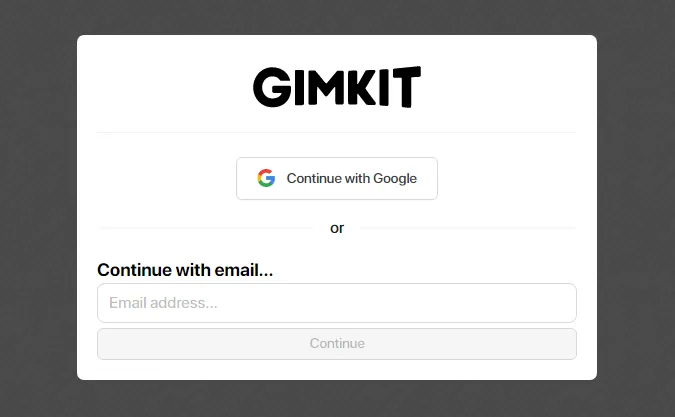
Create a main pillar‑style guide titled something like:
“How to Log In to Gimkit (Full Step‑by‑Step Guide for Teachers & Students – USA 2026)”
Inside, explain:
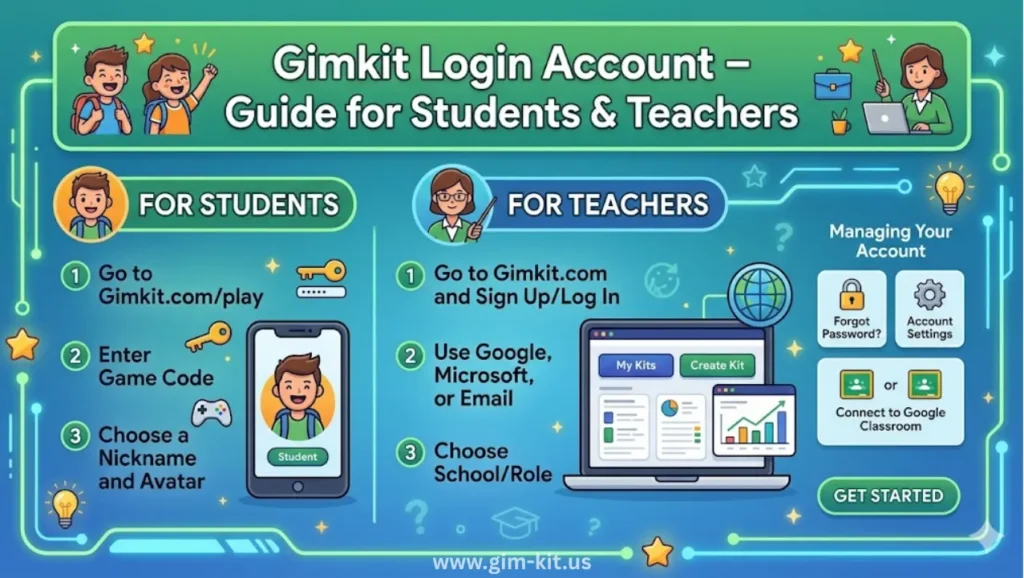
- Open browser → go to gimkit.com → click “Login”.
- Choose Google login (for schools using Google Workspace) or Email login.
- Enter password and 2FA if enabled.
- Confirm dashboard or classroom view loads.
Use screenshots (annotated) and US‑centric language (“school Chromebooks,” “district‑managed accounts”).
Google login vs email login comparison
Create a sub‑article comparing:
|
Aspect |
Google Login |
Email Login |
|---|---|---|
|
Ease of use |
Typing email + password |
|
|
Common in US schools |
Used by individual teachers or parents |
|
|
Shared devices |
Faster, no password memorization |
Password resets if shared device used |
Link this to the main login page and the FAQ on “Do I need a Gimkit account?”
Gimkit login not working – Fix guide
This page should answer:
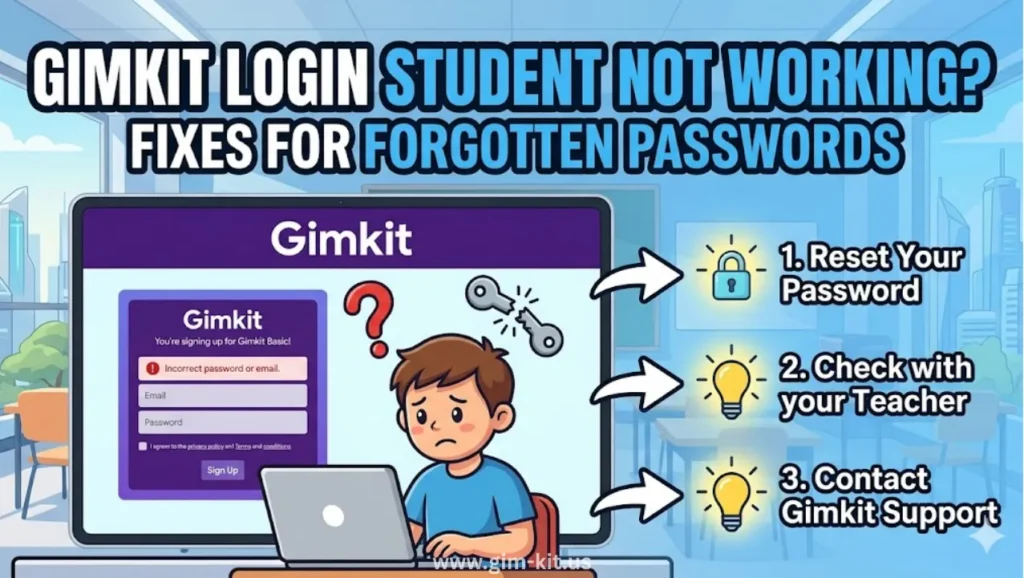
- Wrong credentials: teach users to check caps‑lock, spaces, and school email format.
- Frozen screen: clear cache, try incognito, or switch browser (Chrome → Firefox).
- Account locked: wait 15–30 minutes after too many attempts; then contact support.
Position this as a problem‑solving hub, not just a note.
Forgot password solution
Detail:
- Click “Forgot Password” on the login panel.
- Enter the exact email used to sign up (especially for school domains like @k12.district.us).
- Check spam/junk folder; then reset with a strong password (mix letters, numbers, symbols).
Link this page from:
- The main login guide
- The FAQ: “How do I log in to Gimkit?”
Classroom Use Cases
This targets teachers and school admins in the USA, focusing on practical integration and engagement.
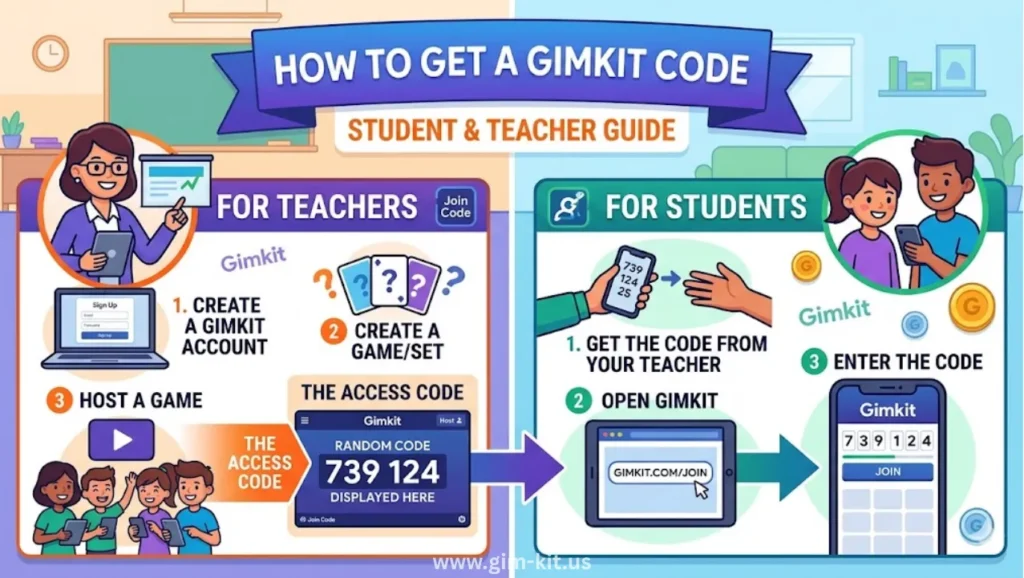
How students join a Gimkit game
Create a guide titled:
“How Students Join a Gimkit Game in the Classroom (USA Teachers 2026)”
Include:
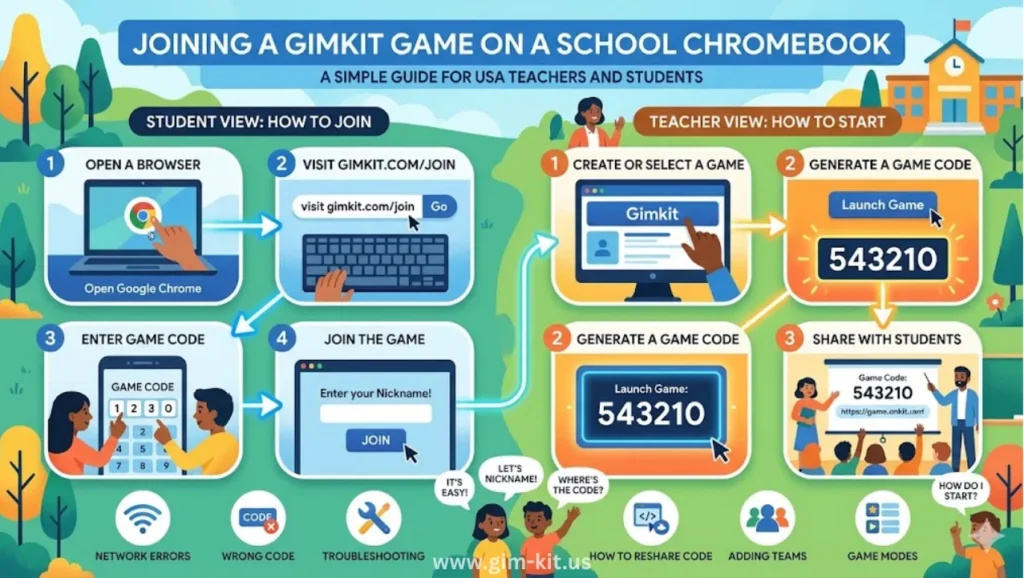
- Teacher hosts a game → shares Gimkit game code (or link) on the board.
- Students open browser → go to join.gimkit.com → enter game code.
- Join screen appearance: name prompt, class name, and “Join Game” button.
Also answer:
- Why some students see “Game code not working” (correct spelling, time limit expired, or host left game).
- Tips for large classes (display code on projector, use QR codes).
How teachers create a game session
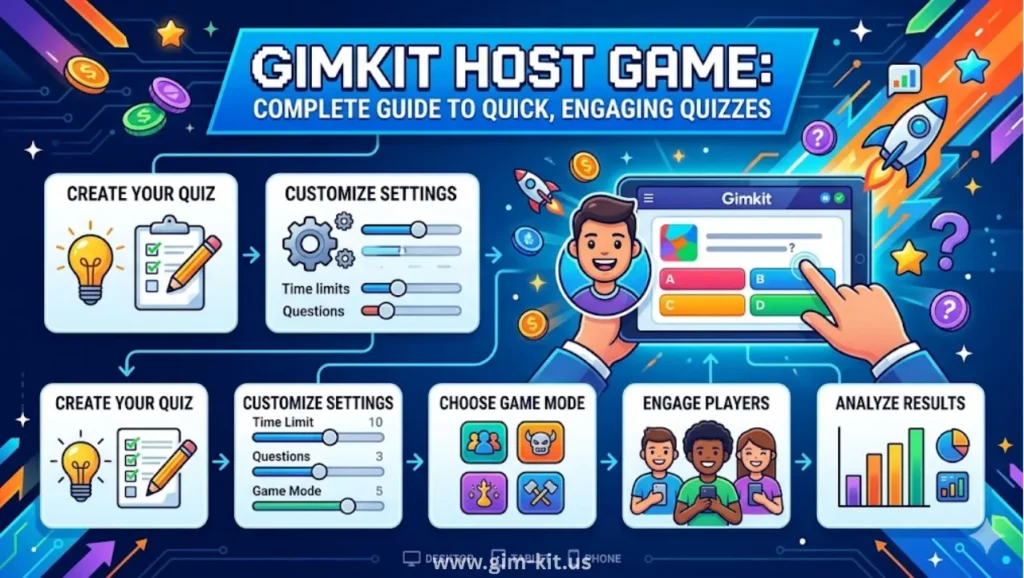
Write a teacher‑focused guide (“How to Create and Host a Gimkit Game – Step‑by‑Step”).
Key steps:
- Log in → “Create” → choose Kit (quiz) or KitCollab (collaborative kit).
- Add questions, choose game mode (e.g., Treasure Hunt, Money Money).
- Set host options: join limit, time settings, and privacy (public vs private).
Explicitly mention:
“In many US districts, teachers limit joining to 5–10 students per kit for controlled formative assessments.”
This subtly answers the FAQ: “Why can only 5 people join my Gimkit?”
Common Gimkit errors in class
Build a classroom troubleshooting page answering:
- “Game crashes mid‑session”: usually browser overload or unstable WiFi.
- “Student names not showing”: incorrect entry or teacher not refreshing game.
- “Scoreboard stuck”: reload or switch to a different game mode.
Again, this acts as a problem‑solving hub, which Google rewards for E‑E‑A‑T (Experience, Expertise, Authority, Trust).
Troubleshooting Hub
Google loves comprehensive hubs that solve multiple problems in one place.
Build a master page titled:
“Gimkit Troubleshooting Hub for US Schools: Fix Login, Game, and WiFi Issues”
Inside, structure it as:
Gimkit not loading on school WiFi
Explain common causes in US K–12 environments:
- Firewall / security filters blocking gimkit.com or WebRTC.
- Bandwidth throttling on “game”‑like platforms.
Include actionable fixes:
- Ask IT admin to whitelist Gimkit domains.
- Try Guest/Staff network if separate from student network.
- Use wired connection if available.
Link this from:
- “Login not working”
- “Gimkit not loading” FAQ
Game code not working
Cover:
- Expired code (time‑limited games).
- Typo in entry (student wrote “G123” instead of “G122”).
- Host closed the game or switched modes.
Always add:
“US teachers: If this happens often, switch to permanent class links or reusable QR codes.”
Login loop problem fix
Detail:
- Browser cache / cookies preventing login completion.
- Incorrect redirect when using Google or Microsoft login.
Solutions:
- Clear cache/cookies or use incognito/private mode.
- Ensure correct email domain (e.g., @parkschool.org).
FAQs
How do I log in to Gimkit?
- Short intro: “You can log in with Google, Microsoft, or email—here’s how.”
- Link to Cluster 1: Login Help and the step‑by‑step guide.
Why is Gimkit 13+?
- Mention COPPA and US child‑privacy laws (websites must restrict features for under‑13 users).
- Explain that student accounts in schools often use teacher‑hosted games (not full accounts).
How do you host a Gimkit?
- Summarize: “Log in → Create a Kit → Choose game mode → Host → share game code.”
- Link to Cluster 2: Classroom Use Cases and “How teachers create a game session.”
Why can only 5 people join my Gimkit?
- Explain: this is a host‑set limit, often used in US schools for small‑group formative assessment.
- Direct users to host settings and “How teachers create a game session.”
How do I join Gimkit?
- Clarify: joining a game vs creating an account.
- Link to Cluster 1 (login) and Cluster 2 (student join guide).
Do I need a Gimkit account?
- Answer:
- Teachers usually need accounts to create kits.
- Students can often join games without full accounts.
- Use this as a bridge between “login” and “classroom use.”
What is Gimkit?
:
Gimkit is an interactive quiz game platform used by US teachers and students to review lessons, test knowledge, and boost engagement through gamified learning.
“How much does a Gimkit account cost?”
- Note: Gimkit has free and paid tiers (exact pricing can change; check official site).
- Suggest: “For US schools, many districts use district‑level licenses or teacher‑paid plans.”
- Link to official Gimkit pricing and Cluster 2 (classroom use) for cost‑benefit context.
Conclusion
In the USA education space, success comes from organizing content into clear intent clusters rather than isolated pages. By developing comprehensive hubs for login help, classroom usage, and troubleshooting, you improve user experience and search visibility.
This approach builds authority, captures long-tail queries, and positions your site as a trusted educational resource for teachers, students, and school administrators.